menu

You may have found me via Instagram or Threads or TikTok where my handle is @pinterestforbloggers. That’s because ya girl is a big fan of that combo. Pinterest and blogging work so well together, BUT I understand it’s not for every creator right now. That doesn’t mean Pinterest isn’t worth it for content creators. Pinterest for influencers is worth it IF you do it right and know what to post on Pinterest and what not to post.
I want to clear it all up for my social media influencers using Pinterest to drive more traffic to their social media profiles, Substacks, YouTube videos and/or affiliate platforms (ShopMy, Amazon, LTK, etc.). I’ll share the in’s and outs of how Pinterest works for influencers and what Pin formats, content types and affiliate content will give you the best return on your investment.
Blog content is not the only thing that works on Pinterest, and it’s time to start repurposing your content on my favorite search engine: PINTEREST.
There is a lot to clear up when it comes to what Pinterest is. If you don’t understand the platform, you will not see results from it, so let’s dive into that first.
Pinterest is not social media. Pinterest is a visual search engine or “search and discovery platform.” That means that people go to Pinterest to get inspiration, tutorials, curated lists, shopping recommendations, education, etc. They go for a specific purpose and search for it in the search bar (i.e. “warm fall outfits”) or they scroll their home feed which is NOT people they follow. It’s just a roundup of similar content to content they engaged with recently (i.e. photos they enlarged, content similar to what they have saved or searched, etc.). They see more of the same based on what Pinterest thinks they’ll like.
People also do not follow people on Pinterest like you would on social media, because they’re not going to Pinterest to hang with their favorite creators. They’re going to Pinterest to plan an event, get inspired for an outfit, learn how to make something… they want to discover information or inspiration NOT people.
The way a content creator succeeds on Pinterest is by sharing content that people are searching for an mastering Pinterest SEO in a way that helps this content show up in those searches. It has to rank high enough that people see it and the content has to be visually appealing enough for people to click it. What’s cool about this: anyone at any stage in their influencer journey can do this. What’s a bummer about this: not enough people know how to do this.
The other key thing to remember is Pinterest is directing people from Pinterest onto the platform where the content is located, which means we need a URL attached to each photo or graphic you share. We don’t want people to follow you on Pinterest (or at least that’s not the GOAL). The goal is to get people off of Pinterest and onto the platform you do want to grow i.e. YouTube or LTK.
This is the lens to see your content through and help you know what is worth repurposing onto Pinterest and what isn’t.
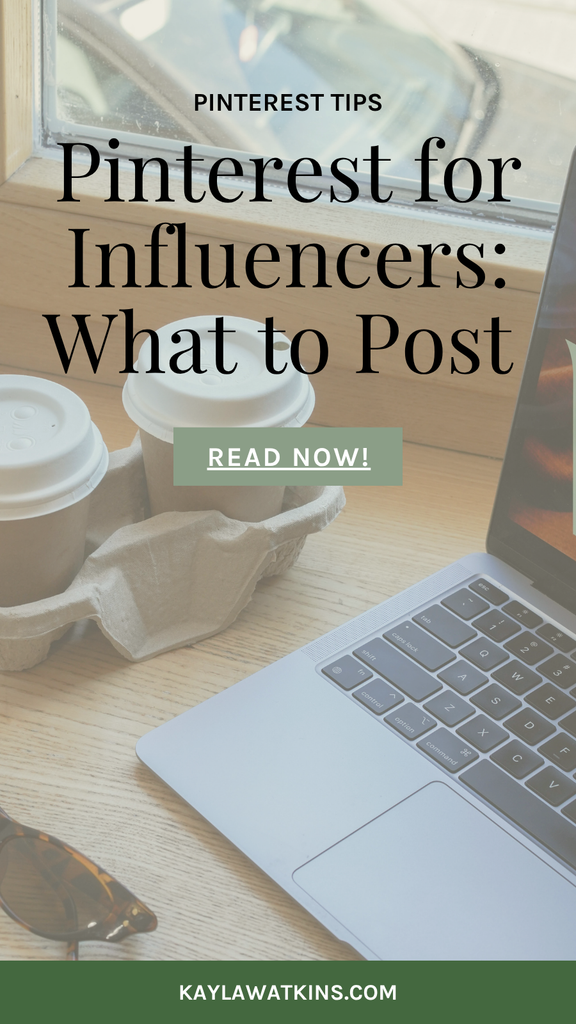
There are different types of pin formats out there and they have changed over there years, but here are the Pin formats in 2026:
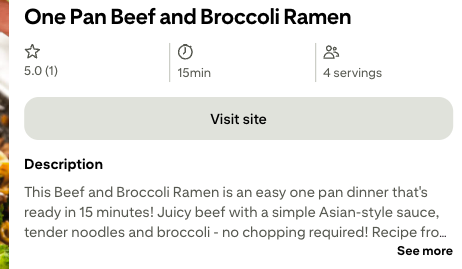
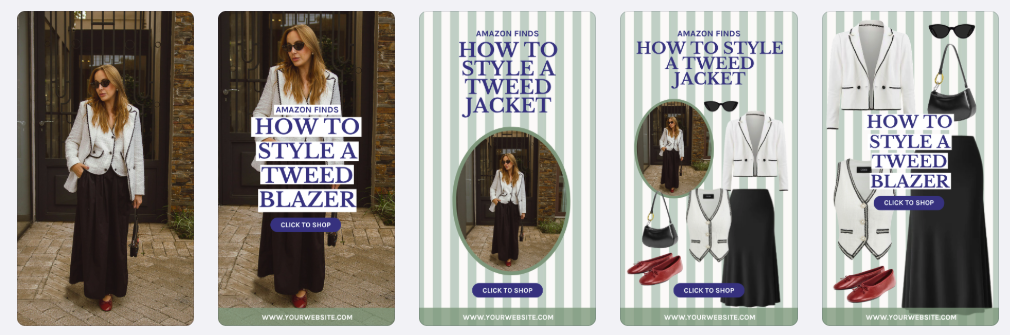
Static pins aka photos and graphics with text overlay (like below) are the kind of Pins I would prioritize because they are the best at driving results on Pinterest. The only exception to that would be if you don’t often take photos and solely do short form video. Then, I’d say graphics with text overlay and short, vertical videos. Don’t reinvent the wheel here. We want to work with what you’ve got as often as possible and just make slight adjustments to make it Pinterest-ready.
If you have both short form vertical videos and photos in your content library use both ALONGSIDE the graphics with the text overlay.
Graphics get clicks which brings the traffic off of Pinterest onto your corner(s) of the internet. These are the only things you have to “make” for Pinterest and once you have a Pin template suite at your disposal, you’re good to go. Creating these pins takes very little time and effort. You just swap out the text and images in those templates for what relates to the new piece of content and you’re good to go.
The key thing to remember when it comes to affiliate marketing on Pinterest is that Pinterest doesn’t pay you, it sends traffic to where you earn money. Because clicking from Pinterest and EXPECTING to go to other pages is part of the pinner’s typical experience, it can become a lucrative way to send people looking for what products you’re promoting directly to an affiliate sale.
People are literally typing in “what shoes to wear with barrel jeans.” You’re curating a list of “what shoes to wear with barrel jeans” alongside your reel or outfit photo. That person comes across your pin that references that (because you know your Pinterest SEO). They are comfortable clicking your pin to shop. That person purchases… woohoo. Affiliate sale!
Here are the ways you can get that kind of traffic on Pinterest
If you don’t have a blog, I would focus on #1. Move onto #2 when you get your workflow down.
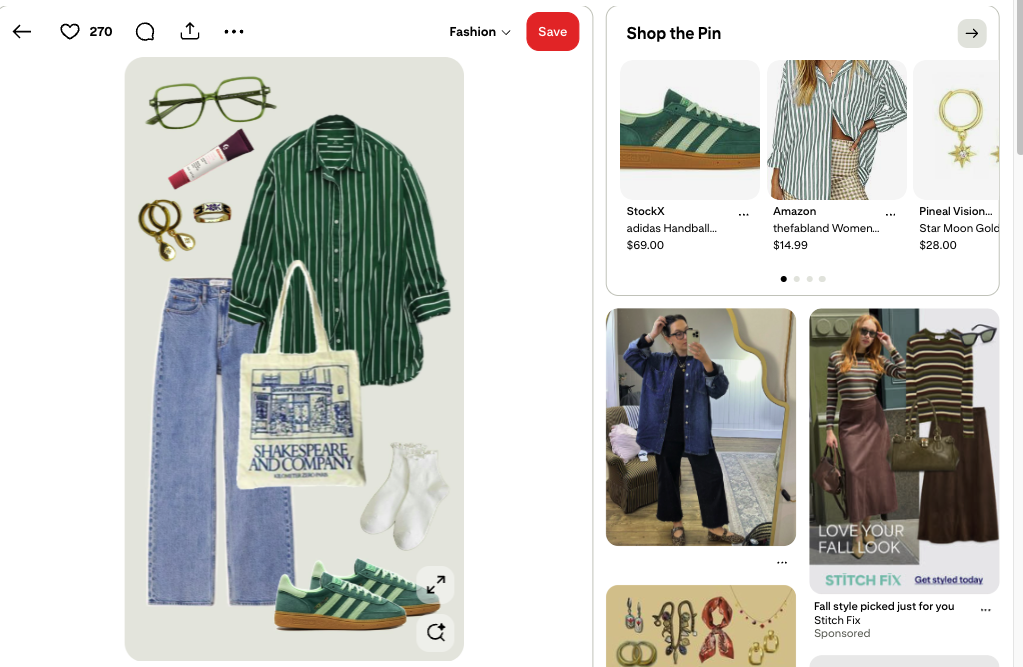
The Pinners do not know you, so you have to warm Pinners up with value. Unlike Instagram followers that feel connected to you and trust your recommendations, Whether it’s in the caption of your LTK post or it’s in the graphic text itself, you need to provide value and sell. For example, info about the fit, info about how to style it, something a buyer would want to know.
To make this worth it, it’s best to keep the Pin creation take the shortest amount of time. I’m going to point you to some posts I’ve written about how to do that when it comes to affiliate marketing:
This is my article, soooo you bet I’m going to take a second to pitch blogging to you. If you want the least laborious way to create a website you own… stick around. This has many benefits for creating a long term content creator career vs. a short term, waiting-on-the-next-brand deal creator career.
It truly is less laborious than you think. Here are the steps to follow to create your first roundup post:
As a social media influencer, there will be content that you create on Instagram/TikTok that may not be a great fit on Pinterest, because they’re not searchable. The nature of Pinterest is for people to be looking for information/inspiration and they do not care who provides it for them. They don’t often search an individual creator for what the creator themself has published. Their home feeds will also not show them content solely from who they follow or any chronologically ordered content. It’s not a home feed where you can catch up from your faves.
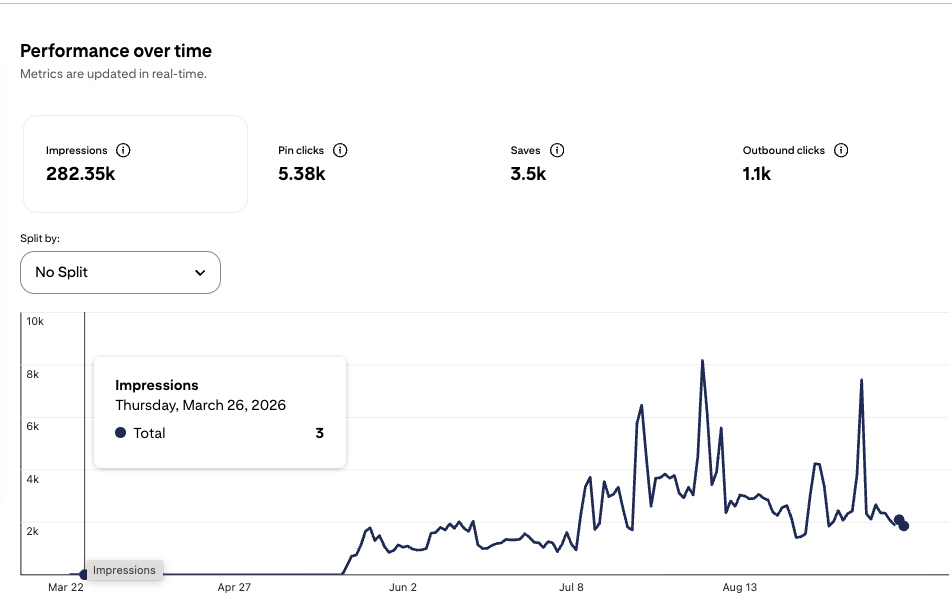
Pinterest takes time. I am the first to say it and the first to remind every new discovery call I have of that. The search engine needs to understand the content, put it in the right search results and then see that the content is received in order for results to start moving. My baseline for seeing traffic growth is 3-6 months, and by that I mean a significant percentage increase of traffic to your site from Pinterest. That amount is SO hard for me to nail down and average when it depends on your niche, where you started on Pinterest, how consistent you are, what kind of content you’re sharing, etc.
If you’re DIY-ing your own Pinterest account, give it 6 months minimum and expect ebbs and flows. You’ll see more patterns year over year when it comes to Pinterest because seasons affect searches, online activity in general… a lot. You’ll see higher impressions > start to see traffic to your site > start to see sales trickle in.
At the 6 month mark, I’d hope you’d see some sales and that you’re tracking your sales well. Often the hardest part with these affiliate platforms is to determine where the source of the sale came from.
Here’s my one hack for tracking what ShopMy affiliate sales came from Pinterest.
Make sure you are updating products when they go out of stock and adding “similar to” options. I would make this just a task you do quarterly, but, at the very least, when you see that a pin on Pinterest is doing really well and it’s directed somewhere with older affiliate content.
While yes, brand deals can get you quick money, which we love. They shouldn’t be the sole thing you rely on for a profitable business. If they are, then brand budget constraints, personnel changes, value changes, etc. can all affect your business. Blogging and affiliate marketing give you something you can market and get your own money for. You can control that income, and while it’s not as dramatic as brand deals, it can give you a consistency you can rely on which is what business owners need to sustain a long term career.
You can also pitch brands paid Pins as part of a larger brand deal… I probably need to write a post on that, huh?
Pinterest is the 1st and 2nd traffic source for 95% of my bloggers’ websites. It’s still one of two search engines (Google being the other) that actually works at driving traffic to lifestyle sites. It still serves creators at all stages, because if you create valueable content, pinners want it. You don’t need followers or to be a celebrity on Pinterest.
It’s still the only place you can repurpose and reuse content 10+ times rather than having to create from scratch and burn out.
It’s still the only place where the shelf life is months/years, so each Pin you create isn’t dead in the water after 24 hours.
Yes, if you know what to post. Pinterest is a search engine, not social media, so the goal is to send people off Pinterest to the platforms you want to grow, like your blog, YouTube, LTK or ShopMy. Pins can drive traffic for months or even years.
LTK/ShopMy/Amazon shoppable posts and collections, YouTube videos, freebies and opt-ins, and product or service pages.
Yes. You can link a pin straight to an LTK post, ShopMy collection or Amazon idea list, tag products in your pins, or pin a blog post that has affiliate links inside.
Plan on 3 to 6 months to see meaningful traffic growth, and around 6 months for sales to start trickling in. Results depend on your niche, consistency and the content you share.
Personality-first content without a searchable hook (like “a day in my life” or GRWM) and quick-sale content like flash sales or limited-time discount codes, since pins take time to gain traction and stay up for a long time.