I’m already intimidated writing this post by just the title I chose. Ha. But the good news is, Pinterest marketing strategy for bloggers is 2026 is much the same as previous years. It’s very similar to how it’s always been on Pinterest. One of the things I’ve learned by owning a Pinterest marketing agency for 8 years, is that the more you are consistent with the basics of a platform, the more you succeed over time. Yes, there are trends and things that pop up and “algorithm changes,” but those often go away.
Pinterest as a Platform
What is true for Pinterest is still true in 2026. Pinterest has always and continues to be the following:
Pinterest is a visual search engine
Pinterest marketing strategy relies heavily on SEO and visuals (photos & graphics).
Pinterest is place to share your content you’ve created elsewhere (blog, LTK, Amazon, ShopMy social, YouTube, podcast, etc.).
Pins link out to that content rather than to other places within the platform.
You can and should create multiple visuals per piece of content meaning you can repurpose content an unlimited amount of time rather than make new content over and over.
Pinterest is interacted with in the feed (home page), in the search bar (typing in “winter outfits” and seeing results) and in similar pins (when they click one they like and see more content like it). People RARELY make it to the pinner’s profile.
Followers are not an indicator of anything on Pinterest when it comes to marketing strategies.
Outbound clicks to your website is still the main things that you want to track, followed by saves, followed by impressions.
You can specifically see results of content that goes to your blog on Pinterest which is extremely useful.
Once something gets traction on Pinterest, it continues to get shown in the feed and search results for weeks, months, even years. A piece of content from 5 years ago might be your #1 pin forever. That’s powerful.
Pinterest Users
Pinners are planners: they go to Pinterest at the early stages of an idea or a plan.
Pinners are spenders: they are looking to shop and happy to find things to purchase.
Pinners are intentional: they often have an idea in mind when they go to the platform and want either inspiration, tutorials, education, curated lists, etc. The search more than they scroll (though, of course, they do a little of both)
Pinners care about what they’re searching for not about the bloggers themselves. This means they’re looking for content that serves them (how to, guides, inspo lists, shopping ideas) not content about the blogger (get ready with me, vlogs, personal stories).
Pinners are mostly women.
Pinners are of all ages!
Where Pinterest Fits in a Blogger’s 2026 Marketing Strategy
One of the most common things bloggers wonder is where the heck to fit Pinterest into their marketing plan when it comes to all the things they could and think they have to be doing to market their blog. From email marketing to social media to Substack… there are a lot of platforms, and you have to choose the right ecosystem for you based on your niche, your audience and your capacity.
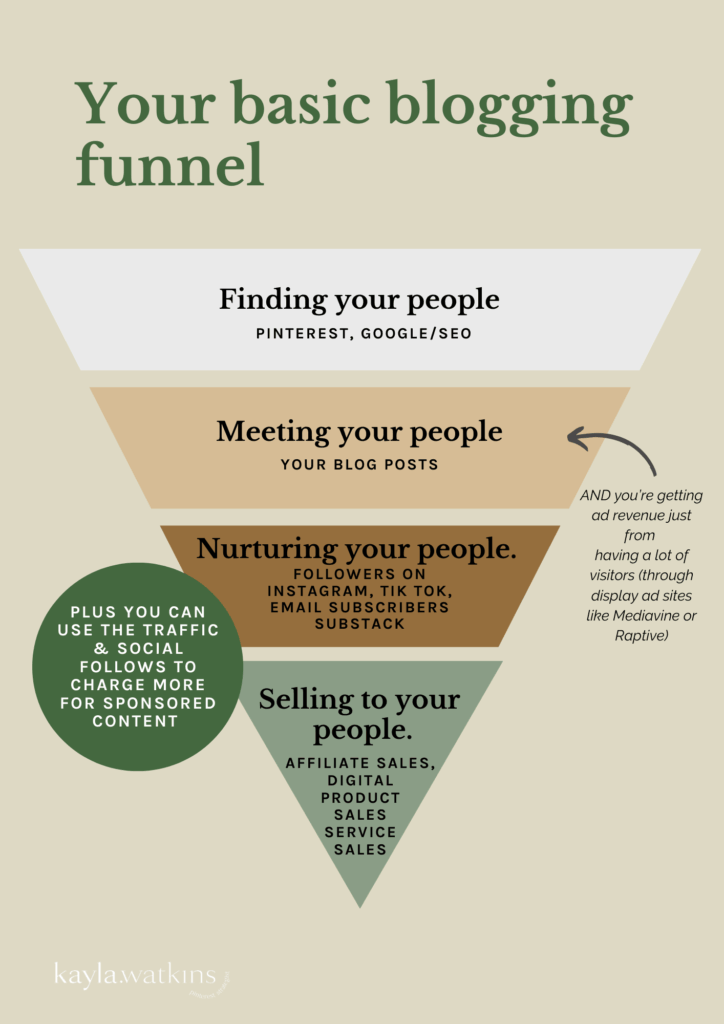
Essentially, bloggers want to use Pinterest to find new people that you know are interested in your content (because they’ve searched for exactly what you shared or clicked through an image that represents the kind of content you create because it came across their feed).
Once you get those people to your blog, you want your content to be captivating and interesting and complete enough to make them want to learn more about you the creator or to make them want to dive deeper into your content.
You keep them engaged by including ways for them to connect with you the creator, binge more content or purchase from you… these are all great ways to keep them warm and have better chances of having permanent community members rather than people that just stop by your site real quick.
How to Move Readers Down Your Blog Funnel:
provide a free opt-in for your email list that is relevant to that piece of content
include affiliate links
include links to similar content you’ve already created
remind them to follow you for more on social media or LTK (include links, widgets, etc. to showcase that)
share info about a low-ticket product that is relevant to the blog post
Also, just the traffic to your page = money in your pocket if you monetize via display ads with companies like Raptive or Mediavine.
Just the traffic to your page= able to charge more for sponsored blog content because you can show that you actually have a fully functional and visited website unlike SO many creators out there.
Having a good Pinterest account= you can add Pins as deliverable to your brand campaigns and charge for that.
What About All the AI and Ads on Pinterest?
I know that is a question for most bloggers, because anyone that uses the platform regularly can see the ads and the AI bullsh*t. Listen, I see it too. I am a pinner, and I also hate when it’s overrun with either of those 2 things.
Here’s the thing though: Pinterest is still 1 of 2 search engines that works for getting new people to your blog. If you have a website and care about people visiting it (and of course your blog is a niche that has potential on Pinterest)… Pinterest is still effective. You can still use the below route to get traffic to your blog. In fact, you should use the below route. You don’t want all your eggs in Google’s basket. You have to diversify traffic sources and Pinterest and Google have the highest potential for being consistent traffic sources.
My Outlook on AI on Pinterest
AI will be something we’re dealing with forever. Making our organic, real people content get found is going to be something we’re constantly working on, but it’s also going to always be something people want to see. We just have to work within the realities of the internet in 2026… and AI is our reality.
I choose not to stress about that and only to focus on getting my clients content found. The thing is… it does get found.
I also believe Pinterest as a platform will have to make changes if it wants to survive. I’m hoping they start to listen and filter better too in 2026. *fingers crossed*
How to Get Blog Traffic From Pinterest in 2026 (Step-by-Step)
This is going to be a basic outline and Pinterest marketing strategy for bloggers. It won’t be the nitty-gritty detail because otherwise that’d take about 3,000 more words, but I’ll link to deeper blog posts about each topic here too.
Make sure you have enough board to cover all over your content buckets and name them in keywords. NO CUTESY BOARD NAMES PLZ N THXS.
Create 5 graphic templates in Canva that you can use to share your blog posts and other content. Make sure they’re easy to read in mobile and have room for keywords, your website URL and a call-to-action (i.e. get the recipe). Try regular size and long graphics first.
Start pinning your content every day. Use a Pinterest-approved scheduler, like Tailwind or Metricool, or manually pin. Alternate URL’s. You don’t want the same URL to go out 2 days in a row. Keep at least 1 day in between.
Use different photos and graphics for pinning these URL’s.
Use the search bar to how people are phrasing what your content is about. Use that phrasing on your pin graphics, pin titles, pin descriptions.
Always describe the content in your pin description and use natural sounding sentences BUT have a lot of relevant keywords in there. For example,“When it comes to the best summer fashion ideas, from casual shorts outfits to sundresses to warm weather fashion, you can find it all here. Follow [blog name] for more seasonal fashion inspiration and fashion styling tips.“
Pin for a whole month at a consistent amount per day without checking out your analytics.
Use Pinterest analytics at the end of the quarter to analyze the style of graphics. See what got the most traffic, saves and impressions (in that order).
Use Pinterest analytics at the end of the quarter to analyze the keywords. See what got the most traffic, saves and impressions (in that order).
Use Pinterest analytics at the end of the quarter to analyze content buckets. See what got the most traffic, saves and impressions (in that order).
Adjust your strategy at that point.
What Doesn’t Work on Pinterest in 2026
There are some firm no-no’s on Pinterest. Then, there are some things that I don’t think are necessary for a “Bare Pinimum Pinterest Marketing Strategy,” as I call it. Here are the things that definitely don’t work:
Hashtags
Cutesy board titles like “One Day…” instead of “Wedding Photos”
Captions that talk to the pinner rather than describe the content
Posting 20 pins to the same URL right in a row
Posting once every 2 weeks
Switching your strategy constantly
Auto-publishing from Instagram without some editing
Key Reminders for adding Pinterest Marketing to Your Blog Marketing Plan
I’d be remiss not to remind you that Pinterest is not an overnight thing. I have found many people want to see viral results like you can sometimes see on Instagram or TikTok. While yes, that happens on Pinterest sometimes… there are two key things to realize:
If something does go viral there, it goes viral for a very long time. If Pinterest knows it’s a good piece of content that it’s users are loving, it keeps showing it. Like for years…
You’re most likely to see slow, year-over-year growth by building on Pins that get traction. Basically one blog post might be bringing 10-50 people to your blog per month in July 2026. Then the same one brings 100-150 people to your blog in July 2027. When the same thing happens for several other blog post… that’s how you grow there.
And all these results happen in about 3-6 months when working with a pro and 6-12 when DIY-ing your Pinterest. That’s what I’ve seen, but again, these results actually LAST. It’s worth putting in the effort now to see compounding results for years to come.
How to Get Started Marketing Your Blog on Pinterest in 2026
If you’re looking to DIY,I’ve got recommendations for a course. If you’re looking to get some professional support to help you reach your Pinterest marketing goals faster. We’re here to help.